


In this guide
Help one raindrop reach a puddle. A short path with a clear beginning and end gives your preschooler a reason to follow the line. Here’s how to show that first movement, pick a page, and make the path easier if your child gets stuck.
Start with one raindrop
Follow one line from the cloud to the puddle with a finger. If your child wants another turn, try the same line with a crayon.
Get the free worksheets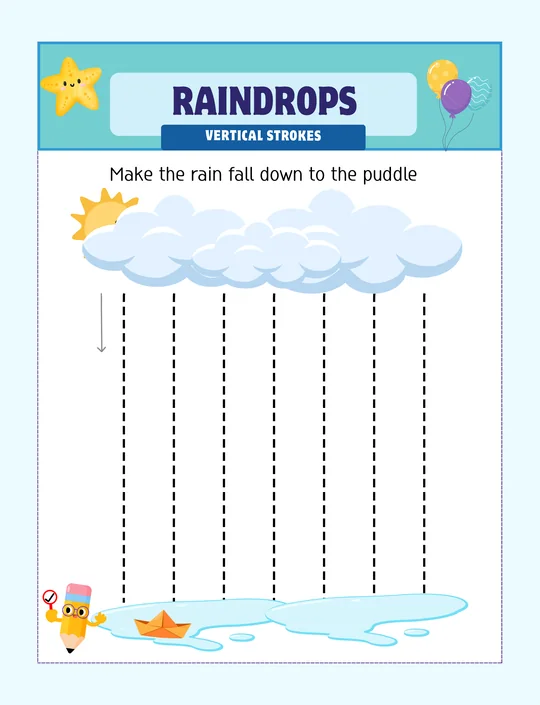
Show your child one short path
- Pick a line with room to move. Draw a short road between two pictures or point to one wide, straight path on a tracing worksheet. Cover the other paths with a sheet of paper if they distract your child.
- Show where to start and stop. Put your finger at the beginning and follow the path once at an easy pace. Say something concrete, such as “Start at the cloud. Down to the puddle.”
- Offer a turn with a finger, then a crayon. Let your child choose the color and move at their own speed. When they reach the end, say what happened. “You brought the raindrop to the puddle.”
- Leave space for a line of their own. If they want to keep going, draw another puddle on a blank sheet and ask where their next raindrop could start. Let them decide where their line goes.
What to try when the line gets tricky
Your child starts in the middle
Put a colored dot at the start and draw a small picture at the end. Say “Can you find the dot?” Then give them a moment to choose how to get from the dot to the picture.
Your child goes off the line at a bend
Make the curve bigger on a blank sheet. Try a single slow bend that a toy car can follow, then run a finger along it together. Offer the crayon again if your child wants to try the same movement on paper.
Your child wants to color the picture
Let them color it. You can draw a short path from the picture to the edge of the page later and ask where it might lead. Leave room for drawing and scribbling alongside tracing, as children use those marks to express their own ideas.
Which tracing worksheet should you print first?
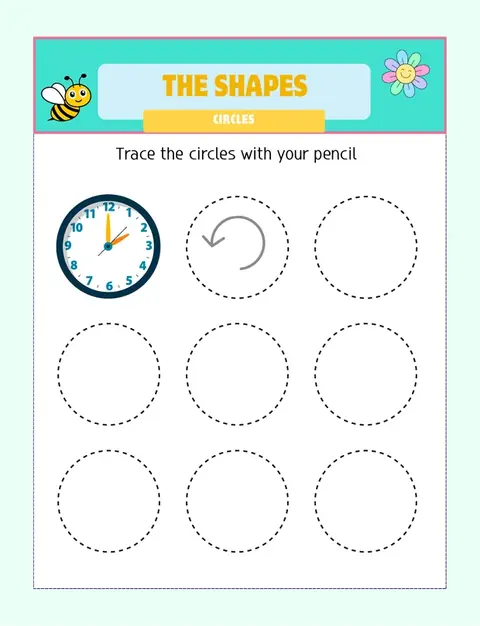
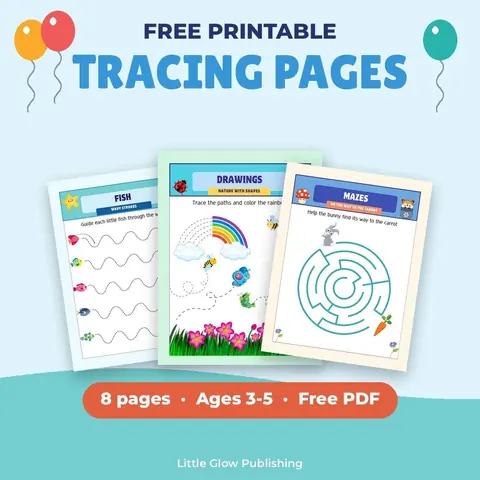
The Little Glow sample pack includes eight tracing worksheets. Choose one based on the movement your child wants to try.
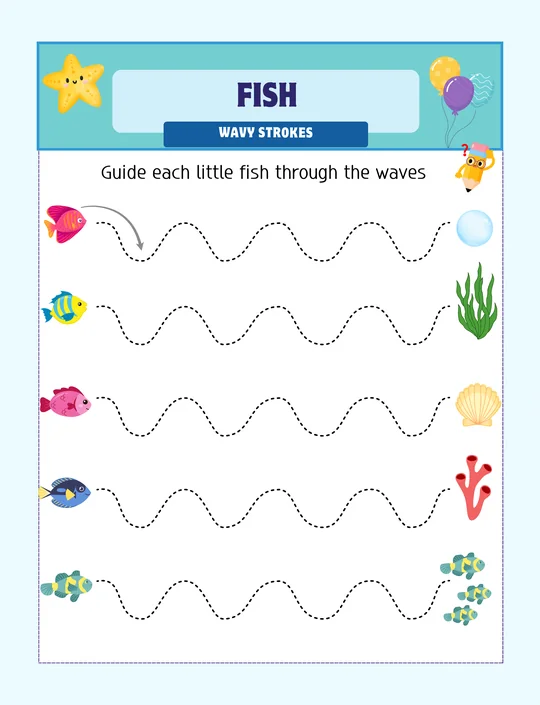
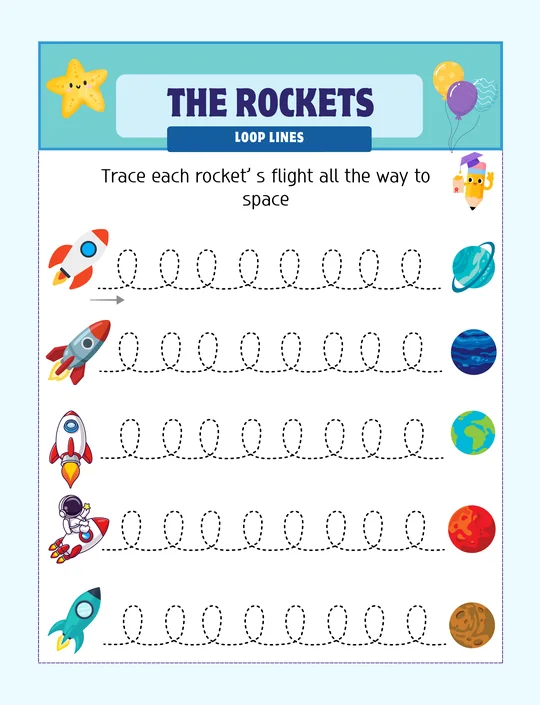
If curves still feel fiddly, print Raindrops first to practice straight strokes. You can preview all eight pages and download them from our free printable tracing worksheets page.
For more ways to explore drawing, shapes, and early writing together, see our guide to pre-writing skills for preschoolers.
More paths to try in the tracing workbook
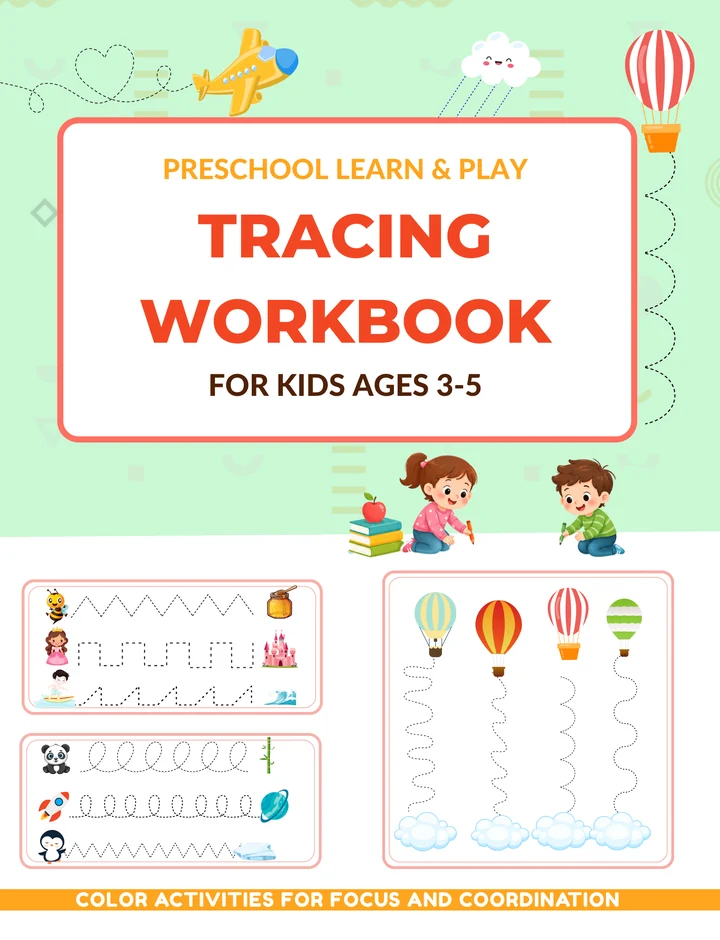
Preschool Learn & Play Tracing Workbook
See the pages for ages 3–5, from straight lines to waves, shapes, pictures, and simple mazes. Pick a new path when your child feels like trying a different one.
Look inside the workbook